Happiness, Heritage and What Follows
Notes from the Monaco Women Forum 2026 by Anastasiia Lutcenko
Friday, 20 March, might easily have passed as just another date in the calendar. Yet it arrived carrying a quiet significance: the International Day of Happiness. Established under the auspices of the United Nations, it serves as a reminder — perhaps an unfashionable one in an age of metrics and acceleration — that well-being is not solely an individual pursuit, but a collective responsibility. Growth, it suggests, must ultimately return to the human scale.
It was, then, rather fitting that the day unfolded as it did in Monaco.
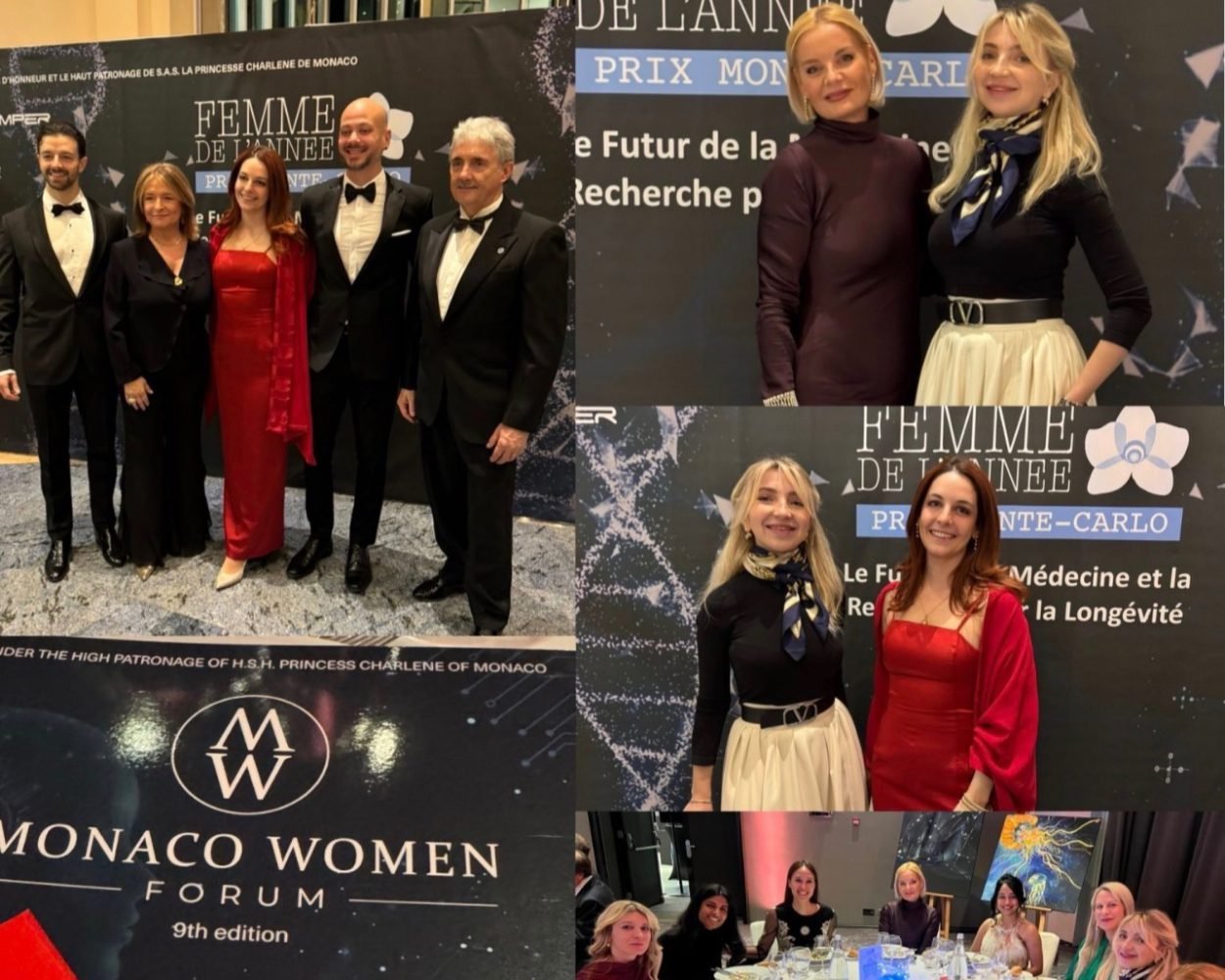
The Monaco Women Forum took place against this backdrop, followed by the Femme de l’Année Monte-Carlo award — an occasion dedicated, at least in principle, to recognising purpose, resilience and contribution. Such events are not uncommon in a principality accustomed to hosting the world. What distinguished this one, however, was something less immediately visible.
Its foundation.
The Forum is not merely organised; it is sustained. That distinction matters. Behind it lies the long-standing commitment of Cinzia Sgambati-Colman and Alberto Colman, whose work has shaped the event into something more enduring than a moment of visibility. In a time characterised by fragmentation and short-term thinking, their approach appears almost countercultural — grounded in discretion, continuity and a certain refusal to chase immediacy.
There is, one might say, a quiet strength in this form of leadership. It does not announce itself, yet it commands respect.
That same continuity extends into the next generation. Through the involvement of Valentina Colman Funez and Edoardo Colman, the Forum is not simply being inherited but actively reinterpreted. It is here — in this interplay between legacy and renewal — that the deeper structure of its success becomes apparent.
Of course, gatherings such as these derive their energy not only from the themes they address, but from the individuals they convene. Among those present were a number of notable figures — some familiar, others less so — each contributing, in their own way, to the character of the event. The exchange of perspectives, rather than any single narrative, seemed to define the atmosphere.
And yet, beyond the discussions and appearances, a more understated truth lingered.
As Winston Churchill once observed, “there is no doubt that it is around the family and the home that all the greatest virtues are created, strengthened and maintained.” It is a sentiment that can feel almost out of place in contemporary discourse — and yet, in Monaco that day, it did not.
In a world that moves with increasing haste, such continuity is not merely relevant. It is, perhaps, essential.
The Monaco Women Forum, in its own measured way, offered a quiet illustration of precisely that.