Formula E, Monaco and the Women Rewiring Motorsport
During Monaco E-Prix week, Formula E offered more than a conversation about electric racing. It revealed how the culture of motorsport itself may be beginning to change.
In Monaco, motorsport has traditionally been measured in noise, horsepower and inherited glamour. Formula E arrives with a quieter proposition: that racing can be electric, sustainable, urban — and still matter culturally.
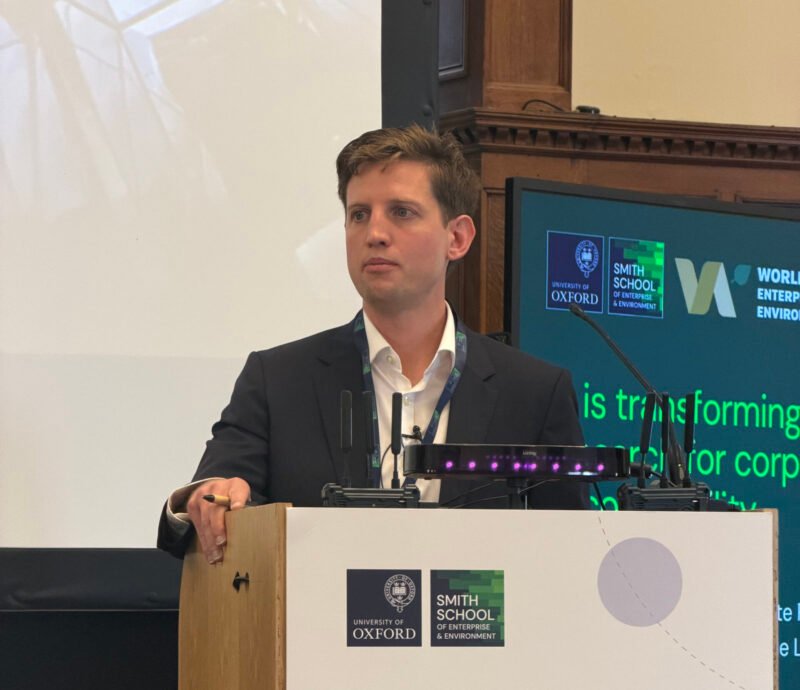
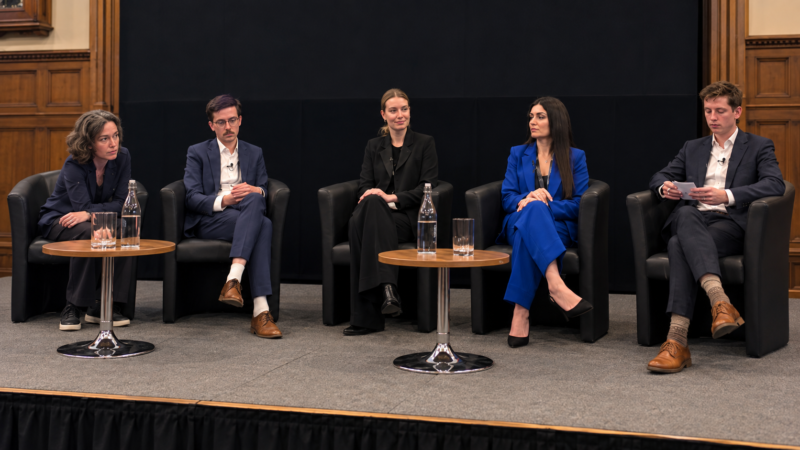
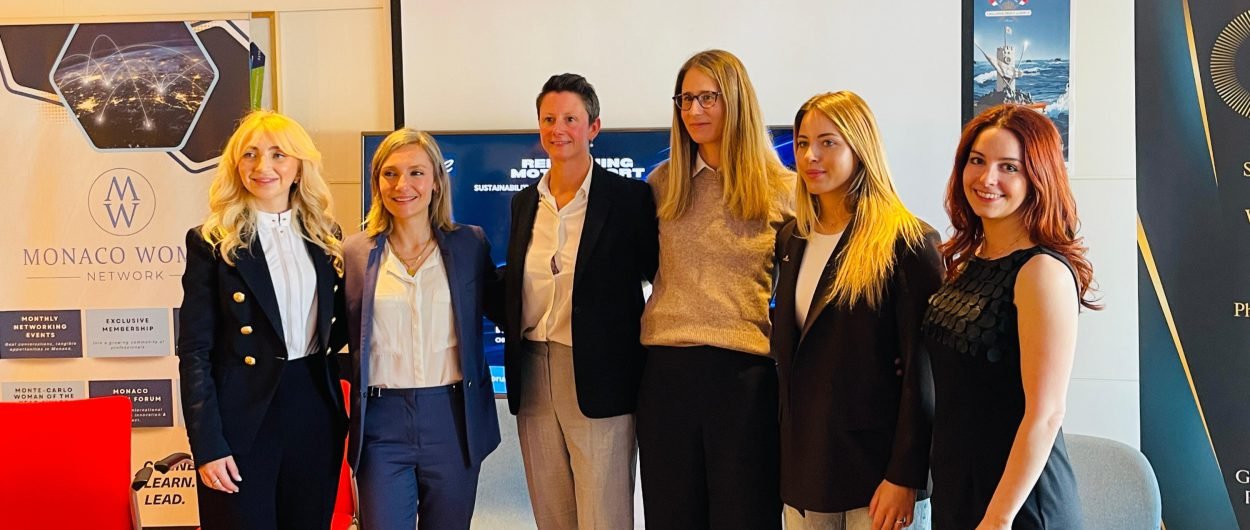
Whether that makes it the future of motorsport or simply the most sophisticated expression of modern corporate virtue-signalling remains an open question. But during Monaco E-Prix week, at a panel organised by the Monaco Women Network — the year-round extension of the Monaco Women Forum — and co-organised by Ad Astra Journal, the conversation around Formula E became far more interesting than a standard discussion about electric cars and sustainability targets.
There was something quietly symbolic about having this discussion in Monaco itself — a place so deeply tied to the mythology of traditional racing. For decades, the Principality has represented a particular vision of motorsport: masculine, glamorous, exclusive and untouchably elite. Formula E, by contrast, speaks the language of accessibility, participation and reinvention.
There was, undeniably, an element of “girl power” to the afternoon — though not in the simplistic corporate sense the phrase often suggests. The stage was occupied entirely by women speaking about governance, sponsorship, audience psychology, engineering pathways and operational strategy in an industry historically built by men, for men.
And perhaps that alone said something about how much the culture of motorsport is beginning to shift.
The Monaco Women Forum itself has increasingly positioned Monaco as a meeting point for conversations around leadership, influence and the future of industries traditionally resistant to change. In that sense, the Formula E discussion felt entirely aligned with its broader ambition: placing women not at the margins of transformation, but at the centre of it.
Behind the scenes, Economist Impact also played a quiet but meaningful role in making the connection possible — a reminder that many of the most interesting conversations happen long before anyone steps onto a stage.
If one person best captured Formula E’s understanding of modern attention, it was Ellie Norman, the championship’s Chief Marketing Officer. She spoke less like a traditional motorsport executive than someone from the digital entertainment world — which, in fairness, may now amount to the same thing.
Formula E understands that younger audiences no longer arrive through tradition alone. The audience already lives elsewhere — scattered across TikTok, YouTube and Instagram — and the challenge is learning how to meet people where culture is already happening.
“We will focus on driving growth in channels like YouTube, TikTok, and Instagram,”
Norman explained, noting that video views had increased by 46 per cent in a year, while TikTok alone had grown by 37 per cent. Most strikingly, she revealed that 94 per cent of audiences reached through Formula E’s e-vote activations were entirely new to the championship.
That statistic mattered because it revealed something larger than successful marketing. Formula E is attempting to build a different kind of sports audience altogether: younger, more digitally native, less loyal to tradition and more interested in participation than passive viewing.
Norman described the goal in almost architectural terms —
making “the top of the funnel much, much bigger” and ensuring Formula E is “easy to find and easy to buy.”
Motorsport, in this model, behaves less like an exclusive club and more like a media ecosystem competing for attention alongside creators, streaming platforms and algorithm-driven entertainment.
Yet for all the talk of innovation, the strongest moments of the panel came when the discussion moved away from branding and towards systems.
Cara Pelchen, Vice President of Sporting, spoke with the calm practicality of someone less interested in slogans than implementation. While many companies speak vaguely about inclusion, Pelchen described something more concrete: pathways, hiring structures and institutional culture.
“If we’re not bringing women into these conversations, then we’re missing 50% of the population,” she said plainly.
What emerged from her remarks was something more pragmatic: women as architects of the system.
Formula E’s FIA Girls on Track programme, she explained, has welcomed more than 6,000 participants over six years, exposing young women not only to driving, but to engineering, mechanics, communications and team management.
More revealing still was Formula E’s all-women test initiative, giving female drivers access to the same cars used by official championship drivers.
“Women are absolutely capable,” Pelchen said. “They just need to be given the same conditions as male counterparts.”
It was one of the strongest lines of the afternoon precisely because it avoided ideology altogether. The issue, she implied, has never fundamentally been talent. It has been access, continuity, trust and opportunity.
Nerea Martí, racing driver and Andretti Team Ambassador, gave that reality a human face. Less polished than the executives around her, but perhaps more persuasive because of it, she spoke candidly about entering motorsport at a time when, as she put it,
“nobody was trusting us and nobody was supporting females.”
There was little self-pity in her account. Mostly exhaustion, determination and realism. Years spent searching for sponsorship while trying simply to remain in competition stripped away the glamorous mythology that often surrounds elite motorsport.
“If you have a dream, fight for it,” she said simply.
Martí’s presence on stage carried an interesting generational contrast. Older structures in motorsport often required women to justify their presence in the room at all. Younger drivers now speak less about permission and more about possibility.
The most philosophically revealing intervention, however, came from Julia Pallé, Formula E’s Vice President of Sustainability.
Reflecting on years spent as the only woman in meeting rooms, she remarked:
“You’re not anymore a woman. You’re a brain.”
Pallé was not dismissing gender; she was describing the moment expertise becomes impossible to ignore. In highly technical environments, credibility still has to be earned repeatedly — but once it is, the conversation changes.
Interestingly, none of the women on stage spoke in the language of grievance. They spoke instead about systems, performance, expertise and access. Perhaps that, more than anything else, was the clearest sign that the conversation itself is evolving.
For decades, motorsport projected a very particular mythology: masculine, mechanical and emotionally closed. Formula E, by contrast, seems increasingly comfortable presenting intelligence, collaboration and social awareness not as weaknesses to performance, but as part of performance itself.
Whether audiences ultimately want their sport to carry moral responsibility alongside entertainment remains unclear. The tensions between spectacle and sustainability, growth and responsibility, are still very real.
But perhaps that is precisely why Formula E matters.
And in Monaco, a city built on old racing mythology, the most interesting shift this week was not technological at all.
It was cultural.
Women were no longer appearing in the conversation as symbols of progress. Increasingly, they were the ones defining what progress itself should look like.
Per Aspera Ad Astra