The Monaco We Don’t Always See
A conversation with Marjorie Crovetto on leadership, sustainability and the quiet work of shaping the Principality
We often admire cities without asking who shapes them.
Monaco is no exception.
Behind its reputation for exceptional quality of life, environmental ambition and remarkably efficient public services are people whose work rarely attracts headlines, yet leaves a lasting mark on the Principality.
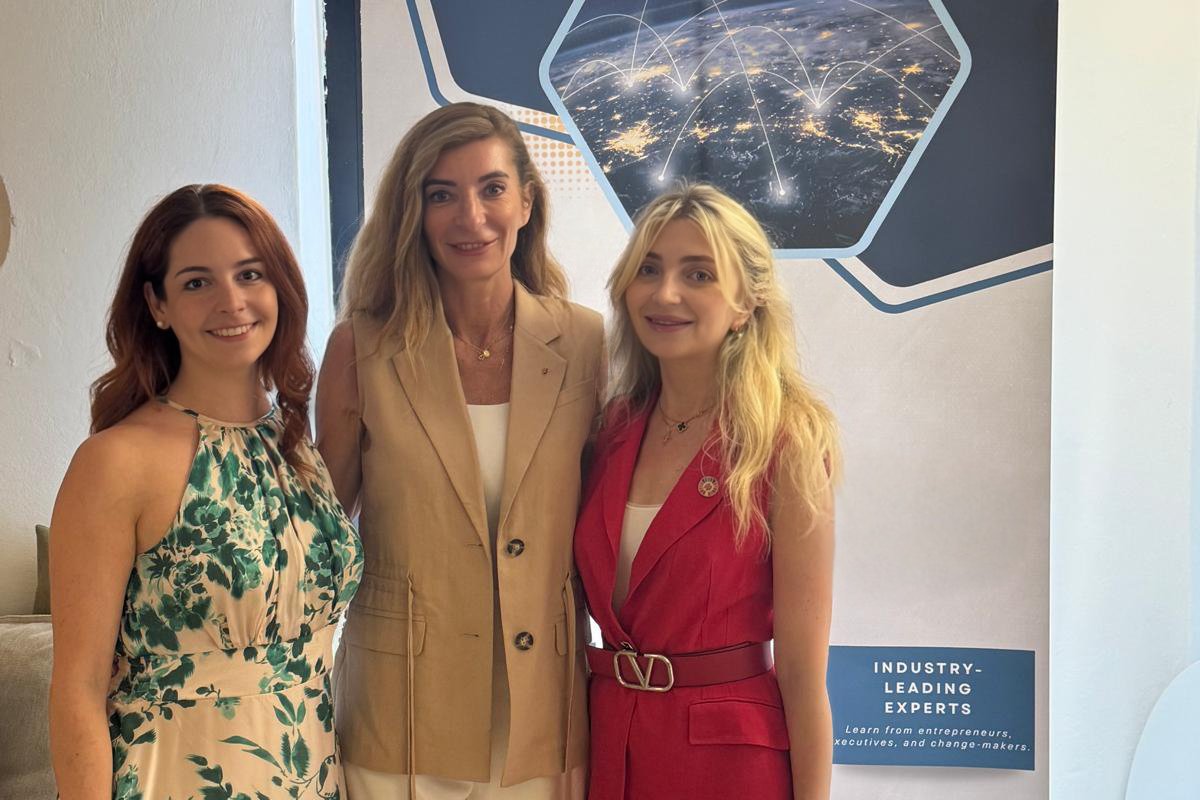
Meeting Marjorie Crovetto, Monaco’s Second Deputy Mayor responsible for Quality of Life, Environment and Sustainable Development, offered an opportunity to discover that quieter side of leadership. Our conversation was less about politics than about stewardship, responsibility and the patient work of building a city for the future.
The discussion itself was made possible thanks to Valentina Colman and the Monaco Women Forum, which has become a unique platform where public figures step away from official speeches to speak openly about leadership, public service and the values that shape Monaco.
Marjorie Crovetto describes herself simply as “a product of Monaco.” Born and raised in the Principality, she studied law in nearby Nice before beginning her career in Monaco’s public administration. Like many careers, hers was anything but linear.
As a student, she dreamed of becoming a police commissioner—or even director of a prison, an unusual ambition at a time when very few women occupied such positions. Instead, she first joined the Department of the Interior, later worked alongside her family’s notarial office and eventually established her own real estate agency. In 2007, she entered municipal politics after being invited by Mayor Georges Marsan to join his team, where her legal expertise quickly proved invaluable.
Listening to her, it becomes clear that in Monaco’s municipal politics the conversation revolves around practical questions.
- How do you renovate a beloved market without losing its soul?
- How do you encourage environmental responsibility without turning sustainability into another slogan?
- How do you modernise a city while preserving the character that made it successful in the first place?
These are not glamorous questions.
Yet they are precisely the ones that determine how people experience a city every day.
Perhaps nowhere is this philosophy more visible than in the transformation of La Condamine Market, one of Monaco’s most cherished public spaces.
Rather than closing the market throughout its renovation, the Municipality relocated traders into temporary kiosks, allowing businesses to continue operating while preserving the market’s role as a social meeting place. Concerts, family events and community activities continued throughout the construction period because, as Crovetto explained, the market is far more than a commercial space—it is one of the places where Monaco comes together.
That same pragmatic approach defines her work on sustainability.
Monaco often appears internationally as a champion of environmental innovation. Yet behind that reputation lies a multitude of practical initiatives that rarely receive international attention.
Electric municipal vehicles.
Repair cafés where broken household appliances are given a second life.
Campaigns encouraging smokers to use portable ashtrays instead of discarding cigarette butts in public spaces.
Projects aimed at reducing food waste by encouraging restaurants and diners alike to rethink everyday habits.
None of these initiatives will solve climate change alone.
Together, however, they illustrate something important: sustainable cities are not built only through ambitious strategies. They are built through countless everyday decisions that gradually change behaviour.
Another theme emerged repeatedly throughout the evening: trust.
Asked about her long collaboration with Mayor Georges Marsan, Crovetto spoke less about hierarchy than about confidence. She described an environment where responsibility is delegated, ideas are encouraged and leadership means enabling others to succeed rather than controlling every decision.
It is perhaps one of the reasons Monaco’s municipal government has maintained such continuity over the past two decades.
The conversation also became unexpectedly personal.
Crovetto spoke candidly about balancing family life, entrepreneurship and public office. There was no attempt to romanticise the challenge. Instead, she acknowledged the importance of having a supportive family while recognising that public service inevitably requires sacrifices.
In an age where leadership is often presented through carefully crafted narratives, authenticity remains surprisingly compelling.
One announcement during the evening also marked an important political moment.
Crovetto confirmed that she intends to lead the Evolution Communale list in Monaco’s 2027 municipal elections, signalling the beginning of what may become the next chapter in her public career.
Monaco is frequently admired for its skyline, its prosperity and its international profile. Visitors notice the yachts, the architecture and the events. Residents experience something else entirely: clean streets, efficient public services, lively neighbourhoods and public spaces that continue to evolve without losing their identity.
Those things rarely happen by chance.
They are the result of years of careful work by people who rarely seek attention for it.
Perhaps that is the Monaco we do not always see.
As our conversation drew to a close, Marjorie Crovetto offered a reflection that seemed to capture not only her own approach to leadership, but the spirit of public service itself:
“When you are truly motivated, when you genuinely believe in what you do, you find the strength to go beyond yourself. And in the end, what remains are the positive things that come from serving others.”
Perhaps that, more than anything, is how Monaco quietly continues to build its future.